Industry News & Insights

OEM / ODM Manufacturing Blog

Expert guides, market trends, formulation tips & compliance updates from Malaysia's premier contract manufacturer.

0%

Choosing the right Automotive Cleaning Chemicals is more complex than selecting the brightest label on a shelf. Global buyers must assess cleaning power, surface safety, dilution ratios, packaging, and transport requirements. A product that performs well in a warm detailing bay may behave differently in cold warehouses or humid workshops.

Mike Stoops, a recognized automotive detailing educator and Meguiar’s training specialist, has emphasized, “The best product is the one that solves the problem without creating another one.” This principle matters when comparing wheel cleaners, degreasers, glass cleaners, interior formulas, tire dressings, and water-spot removers. Stronger is not always better.

Real-world testing should include dusty dashboards, oily engine bays, muddy wheel arches, and delicate coated paint. Buyers should examine technical data sheets, safety data sheets, pH information, dilution instructions, and material compatibility. Clear labeling helps distributors reduce misuse and customer complaints. It also supports safer handling across different markets.

Regulations can vary widely.

Sustainability deserves practical attention. Concentrated formulas may reduce plastic use and shipping weight, but only when users measure them correctly. Some products claim universal performance, yet they may leave residue on textured plastics or haze on glass. That weakness should not be hidden.

This guide reviews ten Automotive Cleaning Chemicals for global buyers. It considers performance, versatility, storage, documentation, value, and responsible use. No product is perfect. The most suitable choice depends on the vehicle surface, local conditions, operator skill, and after-sales expectations.
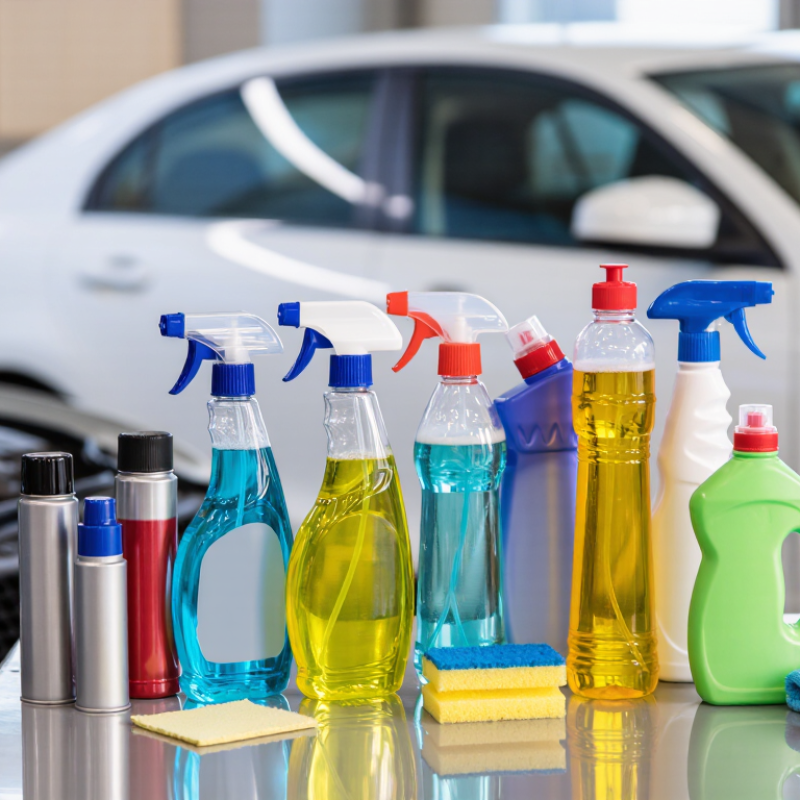
10 Best Automotive Cleaning Chemicals for Global Buyers

Automotive Cleaning Chemicals: Uses, Types, and Buying Criteria

Automotive cleaning chemicals serve different surfaces and soil types.

Pre-wash foam loosens road film before contact washing.

Alkaline degreasers cut oil around engines and chassis.

pH-neutral shampoo protects waxes during routine washing.

Wheel cleaners target brake dust, while tire cleaners remove brown residue.

Glass cleaners should dry without haze.

Interior formulas must suit plastics, fabric, leather, and touchscreens.

One chemical rarely handles every job well.

Buyers should match chemistry to the vehicle surface, soil load, and cleaning method.

Check pH, dilution ratios, temperature limits, and dwell time.

A concentrated formula may reduce freight volume, but poor dilution control can damage trim.

Read the safety data sheet and technical data sheet before importing.

Look for clear ingredient disclosures, batch traceability, sealed packaging, and multilingual labels.

Low-odor and low-VOC options can improve workshop comfort, though performance still needs testing.

“Eco-friendly” alone proves little.

Test a small hidden area first, especially on matte paint, anodized wheels, and older plastics.

Record results under consistent lighting.

Hard water can leave mineral spots, so buyers may need filtered water.

Climate matters too; cold storage can change viscosity, while heat may swell packaging.

Delivery reliability and stable specifications matter as much as cleaning power.

I have seen strong formulas fail because instructions were vague.

That mistake is avoidable, but not always.

Suppliers should provide samples and application guidance before large orders.

The 10 Best Chemicals for Exterior Vehicle Cleaning

10 Best Automotive Cleaning Chemicals for Global Buyers

The 10 Best Chemicals for Exterior Vehicle Cleaning

Exterior vehicle care starts with a pH-neutral car shampoo. It lifts road dust without stripping wax or drying rubber seals. For heavy traffic film, a diluted alkaline pre-wash can loosen grime before contact washing. Use an acid-free wheel cleaner on coated wheels, especially when finishes vary between markets. Iron fallout remover helps dissolve tiny metallic particles that ordinary shampoo leaves behind. Its color change is useful, but it does not replace mechanical decontamination.

Tar remover works well on asphalt spots, while a dedicated glass cleaner removes oily haze from windshields and mirrors. Tire cleaners should lift brown residue without leaving a slippery film. A plastic and rubber protectant can reduce fading, although excessive shine may attract dust. Always check the safety data sheet, dilution ratio, surface limits, and import requirements before purchasing. Global buyers should also request batch information and clear labeling.

Tips: Work on cool panels and rinse chemicals before they dry. Test a hidden area first. Stronger is not always better. I have seen aggressive cleaners create dull patches when used in direct sunlight. No formula is perfect, and water hardness, paint age, and climate can change the result. Keep separate tools for wheels and paint to reduce grit transfer. Wear suitable gloves and eye protection during concentrated chemical handling.

10 Best Automotive Cleaning Chemicals for Global Buyers - The 10 Best Chemicals for Exterior Vehicle Cleaning

No. Chemical Category Typical Active Chemistry Primary Exterior Use Typical pH Typical Dilution Suitable Surfaces Application Method Key Handling Consideration
1 pH-Neutral Vehicle Shampoo Anionic and amphoteric surfactants Routine removal of road dust, light mud, and traffic film 6.0–8.0 Approximately 1:100–1:300 with water Paint, clear coat, plastic, glass, and metal Foam cannon, pump sprayer, or wash mitt Use on a cool surface; rinse before the solution dries
2 Alkaline Pre-Wash Cleaner Alkaline builders, surfactants, and water softeners Heavy traffic film, grease, and winter road grime 10.0–13.0 Approximately 1:20–1:80 with water Paint, wheel wells, chassis, and exterior plastics Low-pressure spray or foam application Short dwell time; avoid prolonged contact with bare aluminum and sensitive coatings
3 All-Purpose Cleaner Surfactants, alkaline salts, and water-soluble solvents General-purpose cleaning of dirt, grease, and organic residues 9.0–12.0 Approximately 1:5–1:50 with water Exterior plastics, tires, wheel wells, and painted surfaces when properly diluted Spray, agitate with a brush, and rinse Test an inconspicuous area; stronger dilutions may affect wax or sealant layers
4 Non-Acid Wheel Cleaner Alkaline detergents and chelating agents Brake dust, road film, and oily wheel contamination 9.0–12.0 Ready-to-use to approximately 1:10 with water Clear-coated alloy wheels, steel wheels, and plastic wheel covers Spray onto a cool wheel, agitate, and rinse thoroughly Do not allow to dry; verify compatibility with uncoated or highly polished metal
5 Iron Fallout Remover Thioglycolate-based iron-reactive compounds Removal of embedded ferrous brake dust and industrial fallout Approximately 5.0–8.0 Usually ready-to-use; follow the product specification Paint, clear coat, glass, and compatible wheel finishes Spray, allow the color-change reaction, agitate lightly, and rinse Strong odor is common; avoid prolonged dwell time and use adequate ventilation
6 Tar and Adhesive Remover Aliphatic hydrocarbons and citrus-derived solvents Bitumen, road tar, tree sap, and adhesive residue Usually not applicable; solvent-based Generally ready-to-use Automotive paint and metal after compatibility testing Apply to a microfiber cloth or affected area, then wipe and wash Flammable vapors may be present; keep away from ignition sources and plastics not approved for solvents
7 Glass Cleaner Water, alcohol solvents, surfactants, and chelating agents Road film, fingerprints, light grease, and interior-free exterior glass cleaning 6.0–9.0 Usually ready-to-use Automotive glass and exterior mirrors Spray lightly and wipe with a lint-free glass towel Avoid overspray on untested plastics, displays, and freshly applied coatings
8 Water-Spot Remover Mild organic acids and mineral-dissolving agents Mineral deposits and hard-water marks Approximately 2.0–5.0 Ready-to-use or approximately 1:1 with water Paint and glass after a small-area compatibility test Apply to a damp applicator, work briefly, and rinse thoroughly Do not use on hot surfaces, porous stone, or sensitive metal without approval
9 Clay Bar Lubricant Water-based lubricants, surfactants, and polymers Lubrication during mechanical removal of bonded contaminants 6.0–8.0 Ready-to-use or approximately 1:1–1:3 with water Paint, glass, and smooth exterior trim Mist generously before and during clay treatment Maintain a wet surface to reduce marring; wash residue away after use
10 Tire and Rubber Cleaner Alkaline surfactants and degreasing agents Brown tire residue, road grime, and old dressing buildup 9.0–12.0 Approximately 1:1–1:10 with water Tires, rubber trim, and selected exterior plastics Spray onto a wet tire, agitate with a dedicated brush, and rinse Avoid painted panels and allow no drying; confirm compatibility with specialty rubber finishes

Note: pH values, dilution ratios, and surface compatibility vary by formulation. Buyers should review the supplier’s current technical data sheet and safety data sheet before import, storage, or use.

Interior, Glass, Tire, and Wheel Cleaning Solutions

10 Best Automotive Cleaning Chemicals for Global Buyers

Interior, glass, tire, and wheel chemicals should solve different problems. One formula rarely performs well everywhere. S&P Global Mobility reported that the average U.S. vehicle age reached 12.6 years in 2024. Older cabins need gentle cleaners that protect textured plastics, vinyl, fabric, and sealed leather. Look for low-residue interior solutions with clear dilution instructions. A neutral glass cleaner should remove road film without leaving haze. This matters for night driving and camera visibility. Tire cleaners need strong soil removal, but excessive alkalinity can dry rubber. Wheel cleaners should match the surface, especially painted, coated, aluminum, or chrome finishes.

Grand View Research estimates the global automotive aftermarket will grow at about 4% annually through 2030. That growth increases demand for concentrated, transport-efficient chemicals. Global buyers should check SDS documents, ingredient disclosure, VOC information, and local labeling rules. Acid-free wheel formulas are often easier to manage, but they still require testing. I still find this easy to get wrong.

Tips: Test every product on a hidden area first. Use separate microfiber towels for glass and interior surfaces. Dilute concentrates with measured tools, not guesswork. Rinse wheels before chemicals dry. For tires, clean the sidewall lettering carefully. Store chemicals away from heat and freezing conditions. Professional detailers often record dilution ratios, surface type, dwell time, and final results. That simple record improves repeatability across different climates and vehicle materials.

10 Best Automotive Cleaning Chemicals for Global Buyers

Interior, glass, tire, and wheel cleaning solutions compared by representative ready-to-use pH.

The pH values are representative industry ranges for ready-to-use formulations and may vary by concentration and application. Neutral and mildly alkaline products are generally preferred for sensitive interior surfaces, while stronger alkaline or acidic cleaners are typically reserved for tires, wheels, and heavy contamination.

Safety, Compatibility, and Environmental Considerations

10 Best Automotive Cleaning Chemicals for Global Buyers

Safety, Compatibility, and Environmental Considerations

Global buyers should judge automotive cleaning chemicals beyond price and cleaning speed. Experienced technicians often test a small area first. Alkaline cleaners can damage polished aluminum or faded coatings. Acidic formulas may stain glass, wheels, and sensitive trim. Solvent-rich products can swell rubber seals and soften interior plastics. Compatibility matters most.

Check the Safety Data Sheet before shipment, dilution, and workplace use. Look for hazard classification, personal protective equipment, storage limits, and transport guidance. UNEP’s Global Chemicals Outlook II projects global chemical production will nearly double by 2030. This increases the need for safer selection and stronger supplier documentation. A common mistake is trusting the word “green” without reading test results. Biodegradability does not automatically mean low aquatic toxicity.

Choose low-VOC formulas where enclosed workshops face poor ventilation. Avoid unnecessary phosphates, persistent ingredients, and excessive fragrance. The OECD’s Environmental Performance Reviews repeatedly highlight wastewater control as a practical environmental priority. Rinse water can carry oil, metals, detergents, and loosened particles into drains. Use collection systems and approved treatment methods. Do not discharge contaminated wash water casually.

A useful purchasing file includes pH, VOC content, corrosion testing, material compatibility, and disposal instructions. Independent laboratory evidence is stronger than marketing language. Still, laboratory testing may not represent every climate, coating, or vehicle age. Buyers should retest products after long storage and under local water conditions. Safety decisions require evidence, but also honest doubt.

How Global Buyers Can Compare Suppliers and Product Quality

Global buyers comparing automotive cleaning chemicals should assess more than a bright label or low quote. The useful shortlist may include alkaline degreasers, neutral shampoos, wheel cleaners, glass cleaners, interior cleaners, and tar removers. Ask each supplier for a current SDS, technical data sheet, certificate of analysis, and batch number. Check active ingredients, pH, dilution ratios, shelf life, and storage temperature. A professional supplier explains why a formula suits painted panels, rubber seals, or aluminum wheels.

Request samples from the same production batch. Test them on dirty panels, floor mats, and coated wheels under controlled conditions. Record contact time, rinsing effort, foam behavior, odor, residue, and surface change after drying. A cleaner that works quickly may still stain trim or dull unprotected metal. It happens. Compare cleaning results at the supplier’s stated dilution, not at an excessive concentration. Then review packaging: leak-resistant caps, chemical-resistant bottles, legible labels, and secure export cartons matter during long transport.

Supplier reliability appears in small details. Compare response times, replacement policies, quality records, production capacity, and independent test evidence. Ask whether every batch follows the approved formula, and request retained-sample procedures. Certifications can support trust, but they do not replace your own performance trial. A low price may hide weaker concentration, unstable raw materials, or higher freight losses. I would leave room for doubt. Recheck claims, especially “non-corrosive” or “eco-friendly,” against test data and local import requirements. Good purchasing decisions come from repeatable evidence, not polished promises.

FAQS

What should pre-wash foam do?

It loosens road film before contact washing. Rinse thoroughly afterward. Do not let foam dry.

Can one cleaner handle every vehicle surface?

Usually not. Use separate formulas for paint, wheels, tires, glass, plastics, fabric, and leather.

How should buyers choose a wheel cleaner?

Match it to painted, coated, aluminum, or chrome wheels. Acid-free formulas may be easier to manage. Test first.

What should interior cleaner buyers check?

Choose low-residue products suitable for plastics, vinyl, fabric, or sealed leather. Keep cleaners away from touchscreens unless approved.

How can glass cleaner prevent haze?

Use a neutral formula and a clean glass towel. Remove road film without leaving residue. Night visibility matters.

What documents should global buyers request?

Request the SDS, technical data sheet, certificate of analysis, batch number, and clear dilution instructions.

How should buyers test product quality?

Test a hidden area first. Then compare dirty panels, floor mats, and wheels at the stated dilution.

What details reveal supplier reliability?

Check batch consistency, packaging, response times, replacement policies, production capacity, and retained-sample procedures. Small details matter.

Why do dilution ratios matter?

Excess concentration can damage trim, rubber, or metal. Measure with tools, not guesswork. I still get this wrong sometimes.

How should chemicals be stored and transported?

Avoid heat and freezing conditions. Use sealed bottles, leak-resistant caps, readable labels, and secure cartons. Transport problems happen.

Conclusion

Automotive Cleaning Chemicals play an important role in maintaining vehicle appearance, protecting surfaces, and supporting efficient professional and consumer car care. This guide explains the main uses and categories, including exterior cleaners, degreasers, shampoos, interior cleaners, glass solutions, tire care products, and wheel cleaners. It also outlines how buyers can select products according to surface compatibility, cleaning performance, dilution requirements, application methods, and storage conditions.

For global buyers, safety and environmental responsibility are essential when comparing suppliers. Products should have clear labeling, reliable technical documentation, consistent batch quality, and instructions for safe handling and disposal. Buyers should also evaluate formulation stability, packaging durability, shipping suitability, testing procedures, and compliance with applicable regional requirements. By reviewing performance data, requesting samples, checking supplier communication, and comparing total purchasing costs rather than price alone, businesses can choose effective cleaning solutions that meet operational needs while helping protect workers, vehicles, and the environment.

Charlotte

Charlotte

Charlotte is a professional marketing specialist dedicated to helping businesses understand how thoughtful products and effective strategies can create lasting value. With extensive knowledge of the company’s offerings, she regularly researches market trends, customer needs, and practical industry......