OEM / ODM Manufacturing Blog
Expert guides, market trends, formulation tips & compliance updates from Malaysia's premier contract manufacturer.
7 Tips for Buying Powder Health Supplements?
Table of Contents
- Define Your Health Goals and Choose the Right Supplement Type
- Check Ingredients, Dosages, and Allergen Information
- Assess Quality Testing and Manufacturing Standards
- Review Safety, Possible Interactions, and Health Claims
- Compare Serving Sizes, Price, Taste, and Ease of Use
- FAQS
- Conclusion
- Related Posts
A jar of powder can look simple on a crowded store shelf. One scoop, a bright label, and promises of better energy may seem convincing. But Powder Health Supplements vary widely in ingredients, serving sizes, quality checks, and intended use. The right choice depends on your diet, health needs, and other products you take. There is no single powder that suits everyone.
Start with the facts on the label. Check the full ingredient list, serving size, allergens, and amount of each active ingredient. Compare those details with the claims on the front. A long ingredient blend can be hard to assess when amounts are hidden. That matters. Look for clear manufacturing information and independent quality testing, while remembering that testing does not prove a product will work for you. Ask a qualified healthcare professional before using a supplement if you take medication, have a health condition, or are pregnant or breastfeeding.
Practical details count, too. Will the powder dissolve in water, or leave grit at the bottom of your glass? Can you store it safely after opening? Does the price reflect the amount you will actually use? Small questions, real consequences. This guide shares seven tips to help you compare products carefully, spot vague claims, and choose with realistic expectations. Even careful research has limits; labels can be confusing, and marketing is designed to persuade. Take your time, keep your needs in view, and treat bold promises with healthy skepticism.
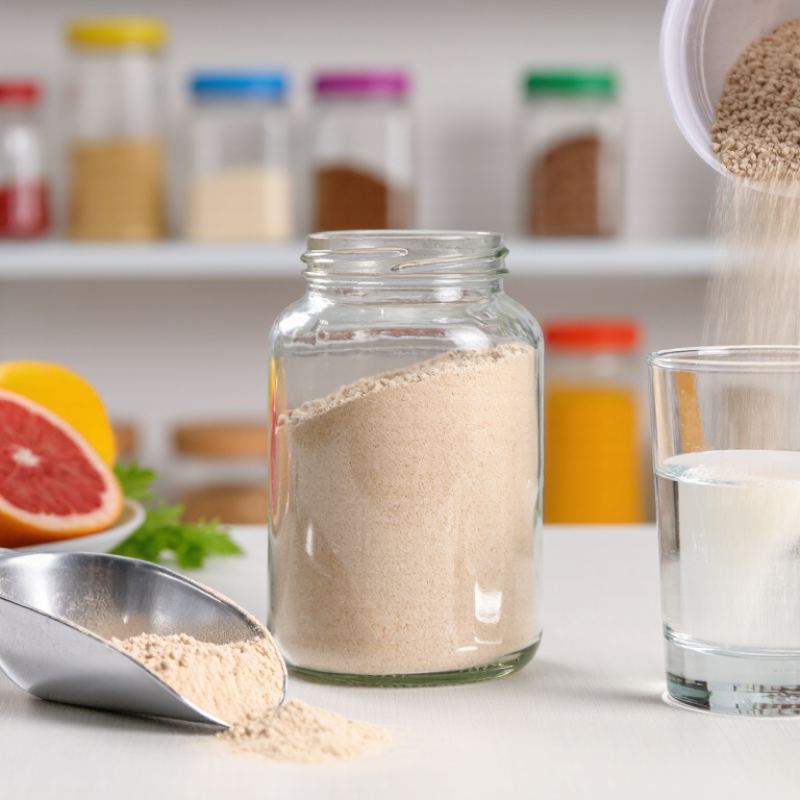
Define Your Health Goals and Choose the Right Supplement Type
Start with a specific need Before buying a powder, name the problem you want it to solve: low protein at breakfast, difficulty meeting fiber needs, or fluid replacement after prolonged sweating. “Better health” is too broad to guide a purchase. The Council for Responsible Nutrition’s 2023 Consumer Survey found that 74% of U.S. adults used dietary supplements, while 55% reported regular use. Those figures describe popularity, not personal need. Start with meals, symptoms, and advice from a qualified health professional. Small details matter: a rushed morning meal differs from a long, sweaty training session.
Choose the right format Match the format to the goal. Protein powder can help when food alone makes protein intake difficult; fiber powder may suit someone whose diet lacks fiber, but increase it gradually and drink enough water. Electrolyte powders are more relevant during substantial fluid and salt losses than for ordinary desk days. A meal-replacement powder is not automatically a balanced meal. Check serving size, added sugars, active ingredients, and relevant allergens. Read the NIH Office of Dietary Supplements’ fact sheets, and ask a clinician or pharmacist about interactions, especially with medicines or existing conditions. I still find labels oddly reassuring; a long ingredient list is not proof of effectiveness. Choose one clear purpose, then reassess whether it helps.
Check Ingredients, Dosages, and Allergen Information
Tip 1: Read the full ingredient list, not just the front label. Look for the amount of each active ingredient per serving, plus serving size. A scoop is not a standard unit; one product’s scoop may hold twice as much powder as another’s. “Proprietary blend” labels can make ingredient-by-ingredient dose comparisons difficult. That matters.
Tip 2: Check whether listed doses match amounts studied for the intended use, and ask a qualified health professional about medicines or health conditions. A 2019 JAMA analysis of U.S. NHANES data found that 57.6% of adults reported using dietary supplements during 2017–2018. The figure describes use, not proof of safety or benefit. Popularity is not evidence. Keep that distinction in mind.
Tip 3: Scan allergen statements and manufacturing notes before buying. In the United States, nine major food allergens must be declared when present, including milk, soy, wheat, and sesame. Check for wording such as “may contain” or shared-equipment warnings, especially if even trace exposure concerns you. “Allergen-free” claims can be unclear, so contact the manufacturer when the label leaves questions. A quick label check helps, but it cannot replace personal medical advice.
Assess Quality Testing and Manufacturing Standards
Powder can hide uneven mixing, moisture damage, or contamination that a label cannot reveal. The CDC’s National Center for Health Statistics reported that 57.6% of U.S. adults used dietary supplements in 2017–2018. That is a large group relying on product quality. Check whether the manufacturer follows FDA dietary supplement current Good Manufacturing Practices under 21 CFR Part 111, which sets requirements for product identity, strength, purity, and composition.
Look closer. A credible certificate of analysis should match the product’s exact lot number and show test results for ingredient potency, microbes, and heavy metals. Check who performed the tests, which methods were used, and whether the laboratory is accredited to ISO/IEC 17025. Third-party certification can add useful oversight, but it does not prove a powder works or guarantee every batch is flawless. I would be cautious with certificates that lack dates, test methods, or lot details; a polished document is not the same as transparent evidence.
Manufacturing audits matter, too. Ask whether the facility is audited regularly and how it handles failed tests, supplier changes, and moisture control. Powder clumping is not proof of poor quality, but it is a reason to inspect the seal, lot code, and storage instructions. The CDC figure comes from NCHS Data Brief No. 399; FDA’s Part 111 regulation provides the manufacturing framework. Neither replaces batch-specific evidence.
7 Tips for Buying Powder Health Supplements? - Assess Quality Testing and Manufacturing Standards
| Tip | What to Check | Why It Matters | Practical Action |
|---|---|---|---|
| 1. Look for clear quality-testing details | Check whether the seller explains what tests are performed and whether testing is conducted by a qualified independent laboratory. | Testing can help assess whether a product meets stated specifications, but the word “tested” alone does not explain what was tested or the results. | Ask for documentation identifying the tested product, batch, test methods, and results. |
| 2. Review the certificate of analysis (COA) | Look for a COA tied to the specific lot or batch number on the package, with the laboratory, test date, methods, and results identified. | A batch-specific report is more informative than a generic document that cannot be linked to the product in hand. | Compare the report’s lot number with the package and check that results are reported against stated specifications. |
| 3. Check identity, strength, and purity testing | Find out whether testing addresses ingredient identity and declared amount, as well as relevant contaminants such as heavy metals or microbes. | Different tests answer different questions; one test does not establish every aspect of a powder’s quality. | Review the COA’s analyte list and reporting limits rather than relying only on broad claims such as “pure” or “clean.” |
| 4. Assess manufacturing controls | For products sold in the United States, ask whether the manufacturer follows applicable dietary-supplement current Good Manufacturing Practice requirements, including 21 CFR Part 111. | These requirements cover manufacturing and quality-control processes; they do not mean that a supplement has been approved by the FDA for effectiveness. | Look for specific information about quality systems, records, and facility controls, not just an unexplained “GMP” claim. |
| 5. Understand third-party certification | Check which independent certification program is involved and what its certification covers, such as product contents, manufacturing practices, or both. | Certification programs have different scopes. A facility audit is not necessarily the same as testing every product batch. | Verify the certification in the program’s official directory and confirm it applies to the product or facility you are considering. |
| 6. Read the label and serving information | Review the Supplement Facts panel, serving size, amount per serving, ingredient list, directions, and allergen information. | Powders may contain several ingredients or allergens, and serving sizes can differ between products. | Check the full ingredient list and compare amounts per serving; consult a qualified health professional about suitability and interactions. |
| 7. Check traceability, storage, and claims | Look for a lot number, expiration or best-by date, intact packaging, and clear storage instructions. Be cautious of claims to diagnose, treat, cure, or prevent disease. | Traceability helps identify a batch, while damaged packaging or poor storage can affect product integrity. Disease-treatment claims are not a substitute for reliable medical advice. | Do not buy products with missing batch information or compromised seals; store them as directed and discuss health concerns with a clinician. |
Note: Dietary supplement rules and certification programs vary by country. Quality testing and manufacturing controls do not establish that a product is effective or appropriate for every person.
Review Safety, Possible Interactions, and Health Claims
A powder can look simple: a tub, a scoop, and a short list of benefits. The label deserves a closer look. Check the serving size, full ingredient list, and amount of each active ingredient. “Proprietary blend” wording may hide individual quantities. In many countries, supplements are not reviewed like medicines before sale. That makes cautious label reading important.
Safety depends on more than the product itself. Powders may contain herbs, caffeine, or large doses of vitamins that affect medicines or health conditions. Ask a doctor or pharmacist before use if you take prescription drugs, are pregnant, or have liver or kidney problems. Bring the container or a clear photo of its label. Small detail, big help. Independent quality testing can support confidence in contents, but it does not prove a supplement works or suits everyone.
Treat dramatic health claims with skepticism. Promises to cure disease, replace prescribed treatment, or deliver fast results are warning signs. Look for specific claims that explain what evidence supports them, and check whether that evidence applies to the ingredient and dose in the powder. I still find labels confusing, even when they seem carefully written. That is a reason to pause, not guess. Start only with a clear purpose, follow the labeled serving, and stop if you notice an unexpected reaction.
Adult Upper Intake Limits for Selected Nutrients in Supplements
These are upper limits, not recommended intake targets. The limits have different scopes: magnesium’s limit applies to supplements and medications, while the zinc limit covers total intake from food and supplements. Check labels and ask a healthcare professional about possible interactions, especially if you take medicines.
Sources: NIH Office of Dietary Supplements: Vitamin C; Magnesium; Zinc.
Compare Serving Sizes, Price, Taste, and Ease of Use
When comparing powder health supplements, start with the serving, not the tub size. The Council for Responsible Nutrition’s 2023 Consumer Survey found that 74% of U.S. adults use dietary supplements. That broad figure says nothing about whether a powder fits your routine, so check the Supplement Facts panel and directions. Compare the amount of the ingredient you want per labeled serving, then calculate the price per serving. A large container can still offer fewer usable servings than its front label suggests.
Taste matters. A powder may look affordable but sit untouched if it is too sweet, gritty, or difficult to mix. If possible, try a single-serving packet before buying a large container. Mix it with the liquid you actually use; texture can change with cold water, milk, or a shaker bottle. Small detail. I sometimes focus too much on price and underestimate this.
Ease of use matters on busy mornings. Check whether the scoop is easy to find, whether the powder dissolves without clumps, and how much cleanup the container requires. Also compare directions: a serving that needs several scoops may be less convenient than one measured portion. The NIH Office of Dietary Supplements explains that labels list serving size and servings per container; those details help make comparisons, but they do not prove a product will suit your needs. Keep expectations modest. A convenient powder is still only useful if its ingredients and directions match your personal needs.
FAQS
Start with one specific need, such as low protein at breakfast or fluid loss after prolonged sweating. “Better health” is too vague.
It may help when meals make it difficult to get enough protein. It is not automatically necessary.
It may help, but increase it gradually and drink enough water. A rushed increase can feel uncomfortable.
Usually, they are more relevant after substantial fluid and salt losses. A long, sweaty session differs from sitting at a desk.
Not automatically. Check serving size, added sugars, ingredients, and allergens.
Read the full ingredient list and the amount of each active ingredient per serving. Scoop sizes vary. A scoop is not a standard measure.
It can make individual ingredient amounts difficult to compare. A long label may look reassuring, but it does not prove effectiveness.
Check allergen statements and shared-equipment warnings. Ask a clinician or pharmacist about medicines or existing health conditions; labels cannot answer everything.
Conclusion
Choosing Powder Health Supplements starts with identifying your personal health goals and selecting a type that fits your needs and routine. Read the label carefully to understand the ingredients, amount provided per serving, and any allergens. Clear, complete information can help you compare products and avoid ingredients that may not suit you.
Look for evidence of quality testing and responsible manufacturing, and treat health claims with care. Consider whether the supplement could interact with medicines or existing health conditions, and ask a qualified healthcare professional if you are unsure. Finally, compare the number of servings, overall price, taste, and ease of preparation. A thoughtful choice should fit both your health priorities and everyday habits.

Blog Tags: