OEM / ODM Manufacturing Blog
Expert guides, market trends, formulation tips & compliance updates from Malaysia's premier contract manufacturer.
How to Choose a Pet Food Contract Manufacturer?
Table of Contents
- Define Your Pet Food Product and Manufacturing Requirements
- Verify Regulatory Compliance and Quality Assurance Systems
- Assess Formulation, Ingredient Sourcing, and Production Capabilities
- Compare Pricing, Production Capacity, and Supply Chain Reliability
- Review Communication, Contract Terms, and Long-Term Fit
- FAQS
- Conclusion
- Related Posts
Choosing a pet food contract manufacturer is not simply a search for the lowest production quote. It is a decision about who will handle your formula, ingredients, processing, packaging, and quality records. Pet Food Contract Manufacturing can help a growing brand reach production without building its own facility, but the right partner depends on your product and plans. A dry kibble line, a wet food recipe, and a limited-run treat may require very different equipment and expertise.
Look beyond a polished sales presentation. Ask what products the facility currently makes, how it manages ingredient changes, and what checks occur during each production run. Request clear examples of batch records, testing procedures, and procedures for addressing a quality concern. Small details matter. A practical conversation might cover minimum order quantities, lead times, packaging options, and who approves a formula adjustment. Visit the facility when possible, or arrange a detailed virtual walkthrough. Notice whether staff can explain their process plainly, not just repeat broad assurances. That is useful evidence, though not a guarantee.
Also clarify who owns the formula, how revisions are documented, and which responsibilities belong to each party. Compare proposals using the same product specifications; otherwise, a low price may conceal a different scope. Even a careful checklist can miss something. Revisit your assumptions, and ask for written answers before committing. A dependable manufacturer should welcome informed questions and communicate limitations honestly. The goal is a capable, transparent working relationship—not a perfect-sounding promise.
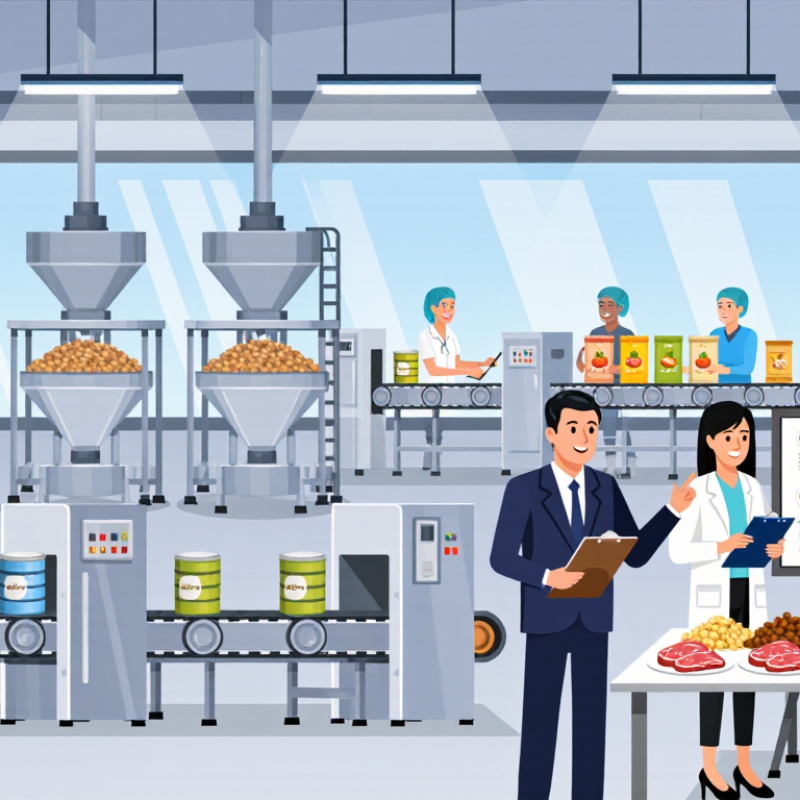
Define Your Pet Food Product and Manufacturing Requirements
Before contacting a contract manufacturer, define the product you want to make. Specify the animal’s life stage, intended format, and key nutritional targets. Is it a dry kibble, a soft food, or a refrigerated product? Each needs different equipment and handling. Small details matter. Describe the kibble’s approximate size, texture, and moisture range, or the pouch weight and consistency you expect. A qualified animal nutrition professional can help review the formula and confirm that its targets are realistic.
List the ingredients, sourcing preferences, and any ingredients that must be excluded. Note whether the recipe needs a particular protein source or a controlled particle size. Share packaging needs, such as bag material, portion size, and storage instructions. Ask how the manufacturer manages ingredient checks, batch records, and finished-product testing. Request clear information about minimum order quantities, production timelines, and what happens when a batch falls outside agreed specifications.
Be honest about what is settled and what is still a working idea. Not every detail will be settled on day one. That changes the run. A manufacturer may flag that a recipe is too sticky for its equipment or that a requested pack size needs different tooling. Treat those discussions as useful evidence, not a sales promise. Record agreed specifications in writing, including acceptable tolerances, sample-approval steps, and the tests used to verify consistency. A precise brief makes it easier to compare manufacturers on practical fit.
How to Choose a Pet Food Contract Manufacturer: Define Your Product and Manufacturing Requirements
Product format affects the equipment and processes a manufacturer needs. These moisture bands are common industry classifications, not universal regulatory limits; confirm your product specifications and applicable requirements with your manufacturer.
Verify Regulatory Compliance and Quality Assurance Systems
When evaluating a pet food contract manufacturer, ask for evidence of compliance with the rules that apply to your product and sales regions. Requirements can differ by ingredient, format, and destination. A certificate alone is not enough. Review current permits, inspection records, written procedures, and any corrective actions from recent audits. Ask who checks regulatory changes and how updates reach production staff.
Quality assurance should be visible on the factory floor. Look for lot coding on bags, clear ingredient labels, clean storage areas, and controlled access to production lines. Ask how incoming ingredients are tested, how batches are released, and which laboratory methods support key claims. Request sample records, such as a batch sheet, a test result, and a traceability exercise linking finished goods to ingredient lots. Could the facility identify affected batches quickly during a mock recall? Ask to see the exercise, not just its policy. Paperwork can look tidy. It can still miss a shift-level habit, like an incomplete cleaning check. Walk through a real production area with the quality lead and ask staff to explain their checks in their own words. No system is flawless; a trustworthy partner can describe its gaps, corrective steps, and timelines without minimizing them.
Assess Formulation, Ingredient Sourcing, and Production Capabilities
Choosing a pet food contract manufacturer starts with the formula, not a sales presentation. The American Pet Products Association’s 2024 State of the Industry report estimated U.S. pet-industry spending at $147 billion in 2023. In a large market, a production mismatch can become an expensive problem. Ask who develops and reviews formulas, and how nutrient targets are verified in finished batches. Request examples of testing for moisture, protein, fat, and shelf stability. Details matter.
Ingredient sourcing deserves equally careful review. Ask how suppliers are approved, whether each delivery has a certificate of analysis, and how substitutions are communicated. Traceability should connect ingredient lots to finished-product batches. A certificate is useful, but it is only one clue; ask how the manufacturer checks incoming materials and investigates variation. Small details can reveal gaps.
Production capability must match the product and forecast. Confirm the manufacturer has suitable equipment for the format, such as extrusion for kibble or retort processing for canned food. Review minimum order quantities, changeover procedures, sanitation controls, and routine quality checks. Ask to see a sample batch record and discuss what happens when a test falls outside specification. A polished facility tour helps, but it cannot replace records. Sometimes the awkward questions are the useful ones.
Compare Pricing, Production Capacity, and Supply Chain Reliability
Choosing a pet food contract manufacturer means comparing the landed cost, not just the price per unit. The American Pet Products Association’s 2024 State of the Industry report puts U.S. pet industry spending at $147 billion in 2023, including $64.4 billion for food and treats. That scale makes small quote differences tempting. Still, ask for itemized costs: ingredients, packaging, testing, setup fees, storage, and freight. Request sample invoices at several order sizes. A cheaper formula may require larger minimum runs, leaving bags of product—and cash—sitting in storage.
Capacity needs proof. Ask for monthly output by product type, current utilization, minimum runs, and the time needed to switch recipes or packaging. The APPA’s 2023–2024 National Pet Owners Survey estimated 82 million U.S. pet-owning households; broad demand does not guarantee your production slot. Check how the manufacturer handles ingredient shortages, late shipments, and equipment downtime. Ask for recent on-time delivery records and backup supplier procedures, then verify them with references. Walk the production floor, if possible. Look at lot records and ingredient storage, not just shiny equipment. One imperfect point: forecasts change, and your first volume estimate may be wrong. Compare flexible order terms alongside capacity, and make sure the quoted lead time includes testing and release checks.
Review Communication, Contract Terms, and Long-Term Fit
A capable pet food contract manufacturer should make communication predictable, not merely friendly. Ask who answers technical questions, how quickly deviations are reported, and who shares production updates. Request a sample batch record and a mock change notice. Can your team trace a delayed ingredient to a revised schedule? Small details matter. The American Pet Products Association’s 2024 State of the Industry report estimated U.S. pet food and treat spending at $64.4 billion in 2023. That scale makes clear specifications, documented approvals, and reliable follow-up commercially important. Market size, however, cannot prove that any individual factory is dependable.
Read the contract for minimum order quantities, lead times, quality testing, formula ownership, change approvals, and responsibility for customer notifications during a recall. Confirm how records are stored and how quickly audit documents can be provided. Get promises in writing. Then compare the manufacturer’s capacity with your likely growth, seasonal peaks, and packaging needs. A polished sales meeting can conceal operational gaps; a slow, specific answer may reveal more. One uncomfortable truth: even a complete contract cannot guarantee smooth production. Leave room to review performance together, and agree on how problems will be escalated before the first shipment. Forecasts change, and no checklist catches every mismatch.
How to Choose a Pet Food Contract Manufacturer? — Review Communication, Contract Terms, and Long-Term Fit
Use this illustrative scorecard to compare prospective manufacturers. Suggested weights are starting points, not industry benchmarks; adjust them to your product, risk tolerance, and business needs.
| Review area | What to verify | Strong-fit signal | Potential warning sign | Suggested weight |
|---|---|---|---|---|
| Communication and responsiveness | Named day-to-day contact, response expectations, escalation path, meeting cadence, and written status updates. | Questions receive clear answers; responsibilities and next steps are documented; production or quality issues are escalated promptly. | Unclear ownership, repeated follow-ups, or important decisions communicated only verbally. | 15% |
| Food safety and quality systems | Applicable facility registrations and certifications, hazard controls, sanitation procedures, testing practices, traceability, and recall readiness. Confirm scope and current status directly. | The manufacturer can explain its controls, provide relevant records, trace ingredients and finished lots, and describe how deviations are investigated and corrected. | Generic assurances without supporting documentation, unclear test responsibilities, or no defined corrective-action process. | 20% |
| Product and process capability | Experience with the intended format, ingredients, processing method, packaging, target specifications, and required production scale. | Capabilities match the product brief; technical constraints are discussed early; sample and scale-up plans include defined acceptance criteria. | The proposed process relies on untested assumptions or requires equipment, ingredients, or volumes the facility cannot support. | 15% |
| Contract scope and responsibilities | Product specifications, forecasts, purchase orders, production approvals, ingredient sourcing, packaging, testing, change control, and ownership of each task. | The agreement and attachments clearly define deliverables, approval steps, recordkeeping, and responsibility for supplied materials and finished goods. | Key terms are left to informal practice, or the contract does not address how specifications and processes may change. | 15% |
| Pricing and commercial terms | Itemized pricing, minimum order quantities, setup or development charges, payment schedule, price-adjustment rules, and treatment of unused or obsolete materials. | Costs and assumptions are transparent, including what is excluded and when a quote may change. | A low headline price with unclear fees, unbounded adjustments, or no agreed process for reconciling material costs. | 10% |
| Capacity, lead times, and continuity | Available production windows, stated lead-time assumptions, capacity planning, contingency arrangements, and communication about delays. | Lead times are tied to defined inputs and approvals; capacity discussions account for forecast changes and seasonal demand. | Firm delivery promises without checking materials, production schedules, or required customer approvals. | 10% |
| Intellectual property and confidentiality | Confidentiality obligations, ownership and permitted use of formulas and specifications, access to records, and handling of customer-provided materials. | The contract distinguishes pre-existing know-how from customer-owned work and states how confidential information may be used and protected. | Ownership or reuse rights are vague, especially for customized formulas, process documents, or development work. | 5% |
| Nonconformance, liability, and insurance | Defect notification, investigation, disposition of affected goods, recall cooperation, indemnity provisions, liability limits, and relevant insurance coverage. | The parties have a documented process for investigating issues and allocating responsibilities; legal terms are reviewed for the specific transaction. | No clear procedure for disputed or nonconforming product, or contract language that has not been reviewed for scope and practical impact. | 5% |
| Total suggested weight | 100% | |||
Before signing, confirm applicable regulatory requirements for the product and market, verify documentation, and have qualified legal and food-safety professionals review relevant terms and controls.
FAQS
Specify the animal’s life stage, food format, nutritional targets, and ingredient preferences. Include kibble size, texture, moisture range, or pouch weight. Some details may change.
Ask whether the recipe works with its equipment and production process. A sticky mixture or unusual pack size may need adjustments. Test a sample.
Request a batch sheet, laboratory result, and traceability record linking finished food to ingredient lots. Ask to see a mock recall exercise. Paperwork can miss things.
Observe ingredient storage, lot coding, cleaning checks, and controlled access to production areas. Ask staff to explain their checks in their own words. Look closely.
Review current permits, inspection records, written procedures, and recent corrective actions relevant to your product and sales regions. A certificate alone is not enough.
Confirm minimum order quantities, lead times, testing, formula ownership, change approvals, and recall notification responsibilities. Put key promises in writing. Details matter.
Ask who handles technical questions, when deviations are reported, and how schedule changes are shared. Request a sample batch record and change notice. Slow answers may reveal gaps.
Compare factory capacity with expected growth, seasonal demand, and packaging needs. Agree on how problems will be escalated before the first shipment. Forecasts change.
Conclusion
Choosing a pet food contract manufacturer starts with clearly defining your product, target customers, ingredients, packaging, and expected production volumes. These requirements help you identify partners with suitable equipment and experience. Before making a decision, review each manufacturer’s regulatory compliance processes, quality assurance systems, testing practices, and traceability procedures to understand how consistently they can meet your standards.
Next, assess their formulation expertise, ingredient sourcing, production capabilities, pricing, capacity, and ability to manage supply disruptions. Ask how they communicate, handle changes, and document responsibilities. Carefully review contract terms, including timelines, quality expectations, and production commitments. The right Pet Food Contract Manufacturing partner should offer more than competitive pricing: they should align with your product goals, provide dependable operations, and support a productive relationship as your business grows.

Blog Tags: